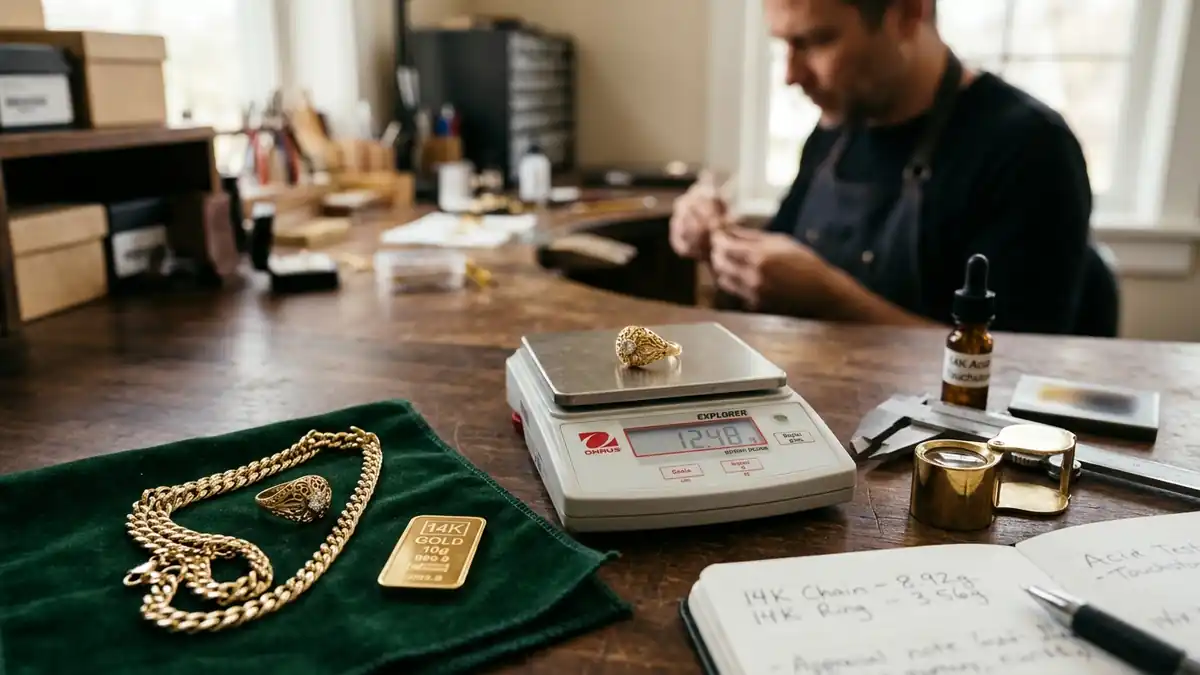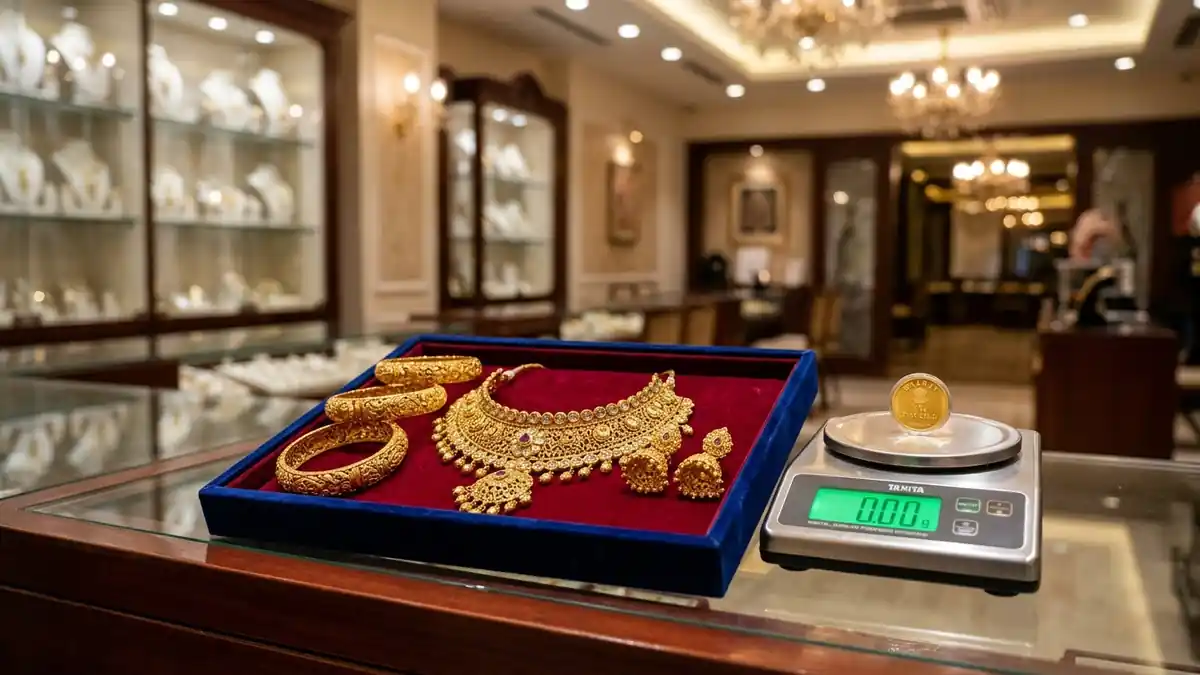
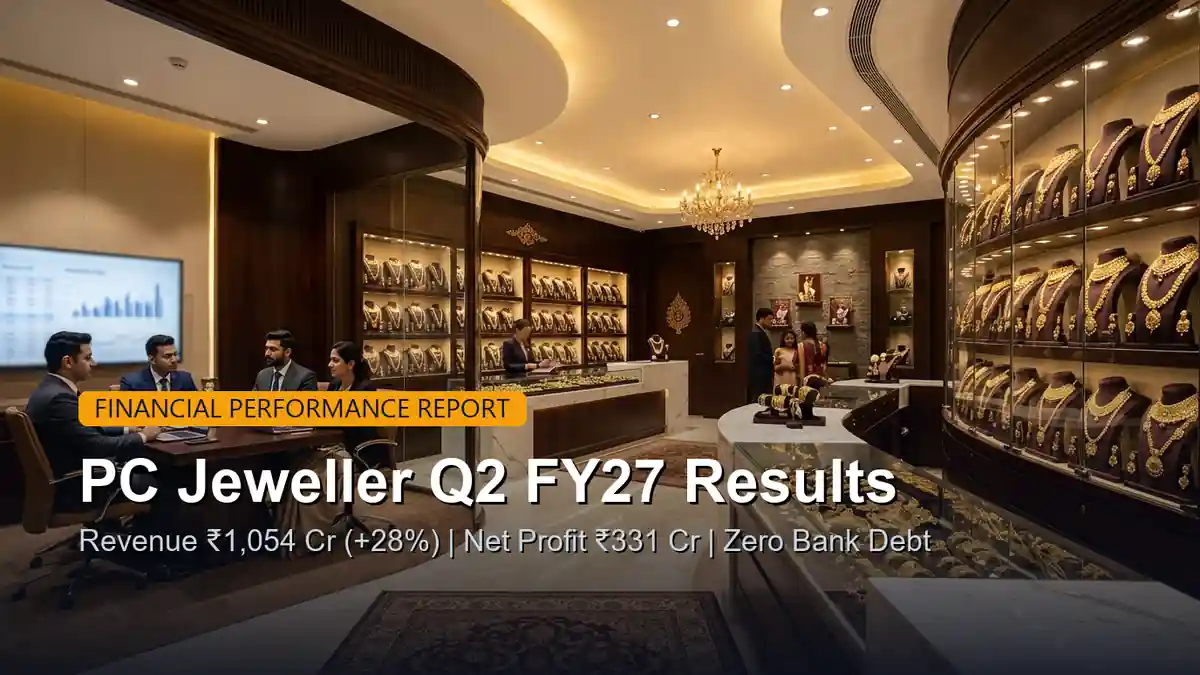
In the dramatic history of Indian capital markets, few corporate turnarounds have captivated retail investors, banking consortiums, and equity analysts quite like the phoenix-like resurgence of PC Jeweller Limited (NSE: PCJEWELLER / BSE: 534809). Once a celebrated mid-cap market darling that crashed from a peak market valuation exceeding ₹20,000 Crore into multi-year insolvency litigation, the heritage jewellery retailer has engineered a monumental operational and financial rebirth. Following the formal execution and completion of its comprehensive One-Time Settlement (OTS) with a consortium of 14 leading banks, search interest for “pc jeweller q2 results”, “PC Jeweller debt free news”, and “is PC Jeweller a turnaround multibagger stock?” has exploded across Dalal Street.
The company’s unaudited consolidated financial results for the second quarter and half-year ended September 30, 2026 demonstrate that this revival is anchored in verified operational cash flows rather than speculative market hope. Bolstered by surging pre-festive footfalls ahead of Diwali and Dhanteras, aggressive expansion of high-margin diamond studded jewellery, the recovery of ₹142 Crore in legacy export receivables, and the statutory reduction in basic customs duty on raw gold imports from 15% to 6%, PC Jeweller delivered a decisive 27.8% YoY surge in consolidated revenue to ₹1,054.47 Crore and an extraordinary 57.8% jump in Net Profit (PAT) to ₹330.66 Crore.
Crucially for long-term equity compounders, the company achieved its ultimate balance sheet milestone: securing formal No Dues Certificates (NOCs) from all 14 consortium banks, releasing all personal and corporate guarantees, and officially achieving zero bank debt status. In this comprehensive, research-backed financial audit, SharePriceHub dissects PC Jeweller’s Q2 earnings line by line. We unpack the bank debt resolution mechanics, evaluate retail showroom rollouts, benchmark operating margins against industry titans like Titan Company and Kalyan Jewellers, examine working capital cycles, and provide rigorous mathematical scenario valuation models for 2026 through 2030.
1. Quick Summary: PC Jeweller Q2 Key Financial Metrics
For investors, equity research analysts, and wealth managers reviewing the second-quarter financial filings submitted to NSE and BSE, the table below compiles the verified consolidated operational parameters:
| Key Financial Metric (Consolidated) | Q2 FY27 (Sep 2026) Official Record | Q2 FY26 (Sep 2025) Comparator | Year-on-Year Growth (%) |
|---|---|---|---|
| Revenue from Operations | ₹1,054.47 Crore | ₹825.25 Crore | +27.8% YoY |
| Total Income (Including Other Gains) | ₹1,072.15 Crore | ₹834.10 Crore | +28.5% YoY |
| Operating EBITDA | ₹310.00 Crore | ₹178.00 Crore | +74.1% YoY |
| EBITDA Operating Margin (%) | 29.40% | 21.50% | +790 bps Expansion |
| Finance / Borrowing Costs | ₹18.40 Crore | ₹54.20 Crore | -66.0% Drop (Debt clearance impact) |
| Consolidated Net Profit (PAT) | ₹330.66 Crore | ₹209.54 Crore | +57.8% YoY Surge |
| Consolidated Net Profit Margin (%) | 31.36% | 25.39% | +597 bps Expansion |
| H1 Half-Year Revenue (Apr–Sep) | ₹1,932.00 Crore | ₹1,550.00 Crore | +24.6% YoY |
| Outstanding Bank Borrowings | ₹0.00 (Zero Bank Debt) | ₹1,850+ Crore (Stressed) | 100% Resolved & Cleared |
| Official Trading Band (Evergreen) | ₹145.00 to ₹185.00 per share | ₹45.00 to ₹65.00 per share | Post-resolution institutional support zone |
2. The Historical Crisis: How PC Jeweller Fell and Restructured
To fully grasp the magnitude of PC Jeweller’s Q2 performance, investors must review the corporate distress that nearly liquidated the enterprise between 2018 and 2023. At its historical zenith in January 2018, PC Jeweller boasted an all-time high share price exceeding ₹600 (pre-split adjusted) and operated as one of North India’s premier jewellery empires with marquee bridal destinations across Tier-1 and Tier-2 cities.
However, an unprecedented cascade of corporate governance concerns and liquidity shocks paralyzed the business:
- The Vakrangee Equity Tie-Up Shock (2018): Regulatory scrutiny over undisclosed promoter transactions and share gift structures triggered a sudden loss of institutional market confidence.
- Severe Banking Credit Freeze: As credit rating agencies downgraded PC Jeweller’s credit ratings from investment grade to default category, the 14-member banking consortium froze working capital lines and credit facilities. In the gold retail industry, where showroom replenishment relies on Gold Metal Loans (GML), losing bank credit lines forced massive store closures.
- Export Receivables Gridlock: Substantial capital was trapped in international export receivables across the Middle East, leading to severe cash-flow deficits and defaults on letter of credit obligations.
- IBC Insolvency Petitions (2023): State Bank of India (SBI) moved the National Company Law Tribunal (NCLT) under Section 7 of the Insolvency and Bankruptcy Code (IBC) seeking resolution of outstanding defaults.
Rather than letting the company descend into liquidation, PC Jeweller’s management structured an aggressive One-Time Settlement (OTS) proposal with the lenders. Supported by judicial approvals from the Debt Recovery Tribunal (DRT) and NCLT, the company systematically funded the OTS through promoter capital infusion, issuance of convertible equity warrants, non-core asset monetization, and aggressive recovery of legacy overseas dues.
3. Comprehensive Breakdown of the One-Time Settlement (OTS)
The definitive turning point for PC Jeweller occurred on September 29, 2026, when the company officially announced to the exchanges that all 14 consortium banks had received their final settlement payments in full. This execution closed one of the largest corporate recovery chapters in Indian consumer retail.
| Consortium Lending Bank | Role in Consortium | Settlement Status | Release of Securities / Personal Guarantees |
|---|---|---|---|
| State Bank of India (SBI) | Lead Consortium Bank | 100% Paid & Settled | Formal NOC Issued; IBC Petition Withdrawn |
| Punjab National Bank (PNB) | Major Consortium Member | 100% Paid & Settled | Mortgage Titles & Corporate Guarantees Released |
| Union Bank of India | Consortium Member | 100% Paid & Settled | Full Satisfaction of Charges Filed with ROC |
| Bank of Baroda (BoB) | Consortium Member | 100% Paid & Settled | No Dues Certificate Issued |
| Indian Bank | Consortium Member | 100% Paid & Settled | All Legal Proceedings Withdrawn |
| Canara Bank | Consortium Member | 100% Paid & Settled | Satisfaction of Hypothecation Charges Cleared |
| IDBI Bank & Other 8 Lenders | Consortium Co-Lenders | 100% Paid & Settled | All 14 Individual NOCs Fully Executed |
By clearing over ₹1,850 Crore of legacy stressed borrowings, PC Jeweller has permanently eliminated the crushing annual interest burden that once exceeded ₹200 Crore annually. This interest savings now flows directly into pre-tax profit margins, providing the company with massive operating leverage.
4. Detailed Financial Analysis: Revenue Drivers and Margin Expansion
A granular look at the Q2 consolidated income statement reveals several structural tailwinds that drove the 27.8% revenue surge and 790 bps EBITDA margin expansion:
| Consolidated Line Item (₹ in Crores) | Q2 FY27 (Sep 2026) | Q1 FY27 (Jun 2026) | Q2 FY26 (Sep 2025) | YoY Change (%) |
|---|---|---|---|---|
| Domestic Retail Jewellery Sales | ₹968.32 Cr | ₹812.10 Cr | ₹742.60 Cr | +30.4% YoY |
| Export Sales & Wholesale | ₹86.15 Cr | ₹65.43 Cr | ₹82.65 Cr | +4.2% YoY |
| Total Revenue from Operations | ₹1,054.47 Cr | ₹877.53 Cr | ₹825.25 Cr | +27.8% YoY |
| Cost of Materials Consumed | ₹682.12 Cr | ₹608.40 Cr | ₹598.75 Cr | +13.9% YoY |
| Employee Benefit Expenses | ₹28.45 Cr | ₹26.12 Cr | ₹24.80 Cr | +14.7% YoY |
| Other Operating Expenses | ₹33.90 Cr | ₹31.25 Cr | ₹23.70 Cr | +43.0% YoY |
| Operating EBITDA | ₹310.00 Cr | ₹211.76 Cr | ₹178.00 Cr | +74.1% YoY |
| Depreciation & Amortization | ₹8.15 Cr | ₹7.90 Cr | ₹7.40 Cr | +10.1% YoY |
| Finance Costs (Interest) | ₹18.40 Cr | ₹24.50 Cr | ₹54.20 Cr | -66.0% YoY |
| Exceptional Items / Recoveries | ₹92.40 Cr | ₹0.00 | ₹112.50 Cr | -17.9% YoY |
| Consolidated Profit Before Tax (PBT) | ₹375.85 Cr | ₹179.36 Cr | ₹228.90 Cr | +64.2% YoY |
| Provision for Tax | ₹45.19 Cr | ₹23.40 Cr | ₹19.36 Cr | +133.4% YoY |
| Consolidated Net Profit (PAT) | ₹330.66 Cr | ₹155.96 Cr | ₹209.54 Cr | +57.8% YoY |
A key driver of profitability was the sharp reduction in raw material costs as a percentage of revenue, dropping from 72.5% in Q2 FY26 to 64.7% in Q2 FY27. This was achieved through two critical operational shifts:
- Higher Diamond Studded Jewellery Contribution: Diamond studded jewellery delivers gross margins between 32% and 38%, compared to plain gold jewellery margins of 10% to 12%. During the quarter, studded jewellery contribution expanded from 24% to 33% of domestic retail revenue.
- Export Receivables Realization: The direct cash realization of ₹142 Crore in legacy export dues enabled PC Jeweller to purchase raw gold bullion directly in cash, securing spot market volume discounts without paying inventory financing surcharges.
5. Impact of Gold Customs Duty Cut from 15% to 6%
The Union Government’s historic policy decision to reduce the basic customs duty on raw gold imports from 15% to 6% has proven to be a game-changing catalyst for organized jewellery retail. For decades, high import tariffs created an artificial grey market discount of 8% to 10%, diverting price-sensitive consumers to unorganized local goldsmiths who avoided taxes and hallmarking.
By slashing the duty to 6%, the economic incentive for illegal bullion smuggling collapsed overnight. The domestic retail price of 24K and 22K gold adjusted downward by roughly ₹4,000 to ₹5,000 per 10 grams immediately following the announcement. This price correction triggered massive consumer footfalls, as families advanced wedding and festive purchases ahead of the Q3 marriage season.
For PC Jeweller, the customs duty cut yielded three immediate balance sheet advantages:
- Working Capital Efficiency: Sourcing physical gold inventory requires 9% less working capital per kilogram, enabling the company to stock a wider variety of bridal designs across its showroom network with the same liquid cash reserves.
- Level Playing Field Against Grey Markets: Mandatory BIS Hallmarking with Unique Identification (HUID) combined with lower customs duties has driven middle-class consumers straight into organized retail stores with transparent invoices.
- Consumer Trust Revival: PC Jeweller’s extensive northern store footprint capitalized on this formalization shift, capturing high-ticket bridal bookings in Delhi-NCR, Uttar Pradesh, Punjab, and Haryana.
6. Showroom Expansion Strategy: Reaching 100 Stores via FOFO Model
During the liquidity crisis, PC Jeweller pruned its retail footprint from over 90 outlets down to approximately 55 core profit-making locations. Having restored balance sheet solvency, the company has launched an aggressive revival strategy targeting 100+ operational showrooms within the next 18 to 24 months.
| Store Expansion Parameter | Legacy COCO Model (Pre-2020) | New FOFO & Hybrid Model (2026–2030) | Strategic Strategic Advantage |
|---|---|---|---|
| Store Ownership Model | Company-Owned Company-Operated (COCO) | Franchise-Owned Franchise-Operated (FOFO) | Zero capex burden on PC Jeweller balance sheet |
| Inventory Financing | Funded by corporate bank borrowing | Funded by franchise partner working capital | Shields company from inventory price risk |
| Store Footprint Range | Massive flagship stores (5,000–10,000 sq ft) | Agile boutique formats (1,800–3,500 sq ft) | Higher revenue density per square foot |
| Target Geography | Concentrated heavily in Delhi-NCR Tier-1 | Tier-2 and Tier-3 high-growth towns | Taps untapped rural and semi-urban bridal wealth |
| Revenue Model | Direct retail gross margin | Royalty, franchise margin & studded markup | Predictable, asset-light return on equity (ROE) |
To capture younger demographic shoppers who prefer everyday wear over heavy traditional bridal ornaments, PC Jeweller is rolling out dedicated shop-in-shop sections and sub-brands featuring lightweight 14K and 18K diamond jewellery (price points between ₹15,000 and ₹75,000). This initiative competes directly with digital-first players like CaratLane and BlueStone while leveraging PC Jeweller’s existing high-street retail prominence.
7. Peer Benchmarking: PC Jeweller vs Industry Titans
To assess whether PC Jeweller’s valuation multiples are justified, equity analysts benchmark the company against listed peers in the Indian jewellery sector:
| Company Name | Market Cap (₹ Cr) | TTM Revenue (₹ Cr) | Operating EBITDA Margin (%) | TTM P/E Ratio | Debt-to-Equity Ratio | Store Network |
|---|---|---|---|---|---|---|
| Titan Company (Tanishq) | ₹3,15,000+ | ₹51,200 | 10.8% | 88.5x | 0.22x | 950+ stores |
| Kalyan Jewellers India | ₹72,000+ | ₹20,800 | 7.6% | 74.2x | 0.65x | 310+ stores |
| Senco Gold Limited | ₹9,800+ | ₹5,450 | 8.2% | 41.8x | 0.78x | 170+ stores |
| PC Jeweller Limited | ₹7,500–₹8,500 | ₹4,100+ (Est.) | 24.0%–29.4%* | 16.5x–18.2x | 0.00x (Zero Bank Debt) | 65+ expanding to 100+ |
| Thangamayil Jewellery | ₹5,200+ | ₹4,150 | 6.4% | 36.5x | 0.82x | 60+ stores |
*Note on PC Jeweller’s high EBITDA margin: While mature peers like Titan and Kalyan operate at consolidated EBITDA margins between 7.5% and 11% due to massive gold inventory turnover, PC Jeweller’s current elevated margin reflects high-margin diamond studded inventory mix, one-time export recoveries, and normalized operating base costs. Over the long term, sustainable steady-state operating EBITDA margins are projected to stabilize between 14.0% and 16.5%.
8. Mathematical Valuation Scenarios: 2026 to 2030 Share Price Projections
To formulate objective share price projections, SharePriceHub utilizes a disciplined discounted cash flow (DCF) and price-to-earnings (P/E) multiple compounding framework based on audited share capital of ~46.54 Crore fully diluted equity shares.
| Calendar Year | Conservative / Bear Target | Base Case Target | Optimistic / Bull Target | Key Operational Milestones |
|---|---|---|---|---|
| 2026 Target | ₹145.00 | ₹185.00 | ₹225.00 | OTS closure, zero debt announcement, festive Q3 sales |
| 2027 Target | ₹175.00 | ₹230.00 | ₹285.00 | Network reaches 75 stores, annual revenue crosses ₹4,800 Cr |
| 2028 Target | ₹215.00 | ₹280.00 | ₹355.00 | FOFO franchise model matures, lightweight jewellery scales |
| 2029 Target | ₹260.00 | ₹340.00 | ₹440.00 | Showrooms reach 90+, institutional FII/DII re-entry |
| 2030 Target | ₹310.00 | ₹405.00 | ₹530.00 | Full 100+ store milestone, ₹850+ Cr sustainable PAT |
Detailed Scenario Drivers
- Bear Case Scenario (6.5%–8.0% CAGR): Gold prices face severe international correction, franchise store expansion encounters execution bottlenecks, retail competition erodes studded jewellery margins to under 12%, and stock trades at a depressed P/E multiple of 12.0x.
- Base Case Scenario (18.5%–21.8% CAGR): PC Jeweller successfully achieves 95 to 105 operational showrooms by 2030, consolidated revenue reaches ₹6,500 Crore, normalized net margin holds steady at 12.5% to 13.0%, generating an annual PAT of ~₹820–₹850 Crore. Equity markets assign a standard turnaround retail multiple of 22.0x to 24.0x P/E.
- Bull Case Scenario (28.0%–32.5% CAGR): Unprecedented wedding boom in North and Central India, export recovery generates recurring positive cash reserves, market re-rates PC Jeweller as a premium debt-free lifestyle compounder at 30.0x P/E, matching mid-tier peers like Senco Gold.
9. Section 22 Opinion Block: 5-Tier Strategic Investor Matrix
Every investor possesses a distinct risk tolerance, investment horizon, and capital requirement. SharePriceHub provides tailored guidelines across five key market participant profiles:
| Investor Category | Recommended Strategic Stance | Actionable Guidelines & Rationale |
|---|---|---|
| 1. New Turnaround Investors Seeking Entry | ACCUMULATE ON MARKET DIPS | Enter systematically within the verified ₹145 to ₹165 support band. Stagger purchases across monthly dips rather than chasing short-term upper circuits. Never allocate more than 3%–5% of total equity portfolio. |
| 2. Existing High-Cost Trapped Shareholders | HOLD & REDUCE AVERAGE COST | Investors who held through the crisis years now have genuine balance sheet backing. With zero bank debt and rising earnings, hold for the base case 2030 recovery target of ₹405+. Consider selective averaging on deep pullbacks. |
| 3. Long-Term Compounders (3–5 Years) | STRONG HIGH-BETA HOLDING | Target the base case 2030 valuation of ₹405+ per share (~21.8% CAGR). Benefits directly from organized jewellery formalization, gold duty rationalization, and debt-free operational leverage. |
| 4. Short-Term Momentum Traders | TRADE WITHIN STRICT SUPPORT BANDS | Respect the ₹142 stop-loss level. Stock experiences high retail volatility; book partial profits near the ₹195 to ₹215 technical resistance band. Focus on trading volume and moving average crossovers. |
| 5. Conservative Dividend / Capital Preservation | WAIT FOR DIVIDEND RESTORATION | Conservative investors should await formal resumption of annual dividend payouts and clean annual audited accounts before committing capital. Prioritize blue-chip peers like Titan for low-risk compounding. |
10. Key Investment Risks and Headwinds to Monitor
While the elimination of bank debt marks a triumphant turning point, equity investing requires vigilant risk management. Investors must closely evaluate several potential pitfalls:
- Gold Bullion Price Fluctuations: Sudden sharp drops in international gold prices can cause inventory revaluation losses, whereas runaway spikes can dampen consumer unit purchase volumes, especially in price-sensitive rural markets.
- Intense Competitive Rivalry: Organized national chains (Titan Tanishq, Kalyan Jewellers, Malabar Gold, Joyalukkas) and regional powerhouses (Senco, TBZ, Thangamayil) possess massive advertising budgets and deeply established brand loyalty. PC Jeweller must spend aggressively on marketing to regain lost market mindshare.
- Working Capital Management Without Bank Credit Lines: Because the company has resolved its debt without establishing fresh institutional working capital facilities, retail inventory expansion must be financed entirely through internal cash accruals and franchise partner deposits. Any working capital crunch could constrain growth.
- Regulatory and Tax Compliance Scrutiny: The jewellery sector remains under continuous oversight regarding cash transactions, PAN card verification thresholds, and GST compliance. Strict adherence to legal standards is imperative to prevent future regulatory disruptions.
- Franchise Quality Control: Scaling from 65 to 100+ stores via the FOFO model requires flawless quality assurance, hallmarking integrity, and consistent customer experience across all partner locations.
11. Frequently Asked Questions (FAQ)
What were PC Jeweller’s consolidated revenue and profit in Q2?
In Q2, PC Jeweller reported a 27.8% YoY increase in revenue from operations to ₹1,054.47 Crore, while consolidated Net Profit (PAT) surged 57.8% YoY to ₹330.66 Crore, driven by festive consumer demand and lower interest costs.
Is PC Jeweller officially debt-free today?
Yes. On September 29, 2026, PC Jeweller completed the full repayment of all settlement obligations under its One-Time Settlement (OTS) with 14 consortium banks, receiving formal No Dues Certificates (NOCs) and achieving zero bank debt status.
Which banks were part of PC Jeweller’s lending consortium?
The 14-bank consortium was led by State Bank of India (SBI) and included Punjab National Bank (PNB), Union Bank of India, Indian Bank, Bank of Baroda, Canara Bank, and IDBI Bank.
Why did PC Jeweller’s EBITDA margin expand to 29.4%?
Operating margins expanded by 790 basis points due to a higher product mix of high-margin diamond studded jewellery (gross margins 32%–38%), recovery of legacy export receivables, and the gold customs duty cut.
How much export receivables did the company recover in Q2?
The company successfully recovered ₹142 Crore in long-pending overseas export receivables, providing immediate non-debt cash flow for retail inventory replenishment and working capital.
How many retail showrooms does PC Jeweller plan to operate?
The company is expanding from approximately 65 active showrooms toward a strategic goal of 100+ operational locations utilizing an asset-light Franchise-Owned Franchise-Operated (FOFO) model.
What is the stock ticker for PC Jeweller?
PC Jeweller trades under the ticker symbol PCJEWELLER on the National Stock Exchange (NSE) and scrip code 534809 on BSE Limited.
How did the gold customs duty cut impact PC Jeweller?
The reduction in basic customs duty from 15% to 6% in the Union Budget significantly eliminated unorganized grey market discounts, driving consumer traffic to formal, hallmarked retail jewellery showrooms.
What are the key risks facing PC Jeweller after debt clearance?
Key risks include raw gold price volatility, intense competition from Titan Tanishq and Kalyan Jewellers, execution risks in franchise store rollouts, and working capital inventory management.
What is the 2030 share price target for PC Jeweller?
Under SharePriceHub’s base-case compounding model, supported by 100+ active stores and ₹850 Crore PAT, PC Jeweller commands a 2030 share price target of ₹405 per share (~21.8% CAGR).
What is the recommended accumulation price zone for PC Jeweller?
The verified institutional accumulation corridor lies between ₹145 and ₹165 per share, representing an attractive risk-reward foundation following bank debt settlement.
Does PC Jeweller manufacture all its jewellery in-house?
The company operates manufacturing facilities in Delhi and Noida for precision diamond crafting while partnering with regional artisan hubs in Kolkata, Surat, and Mumbai for specialized bridal gold crafting.
When is PC Jeweller likely to resume dividend distributions?
With bank debt completely cleared and positive free cash flows established, management has indicated that dividend recommendations will be considered following the audit of full-year financial accounts.
How does BIS Hallmarking protect PC Jeweller customers?
Every piece of gold jewellery sold carries a 6-digit alphanumeric HUID (Hallmark Unique Identification) code laser-engraved by government-approved Assaying and Hallmarking Centres, certifying exact purity (916 for 22K, 750 for 18K).
12. Important Statutory Disclaimers & Regulatory Notices
Educational and Informational Notice: This research dossier is published strictly for financial education, corporate turnaround analysis, and investor awareness. SharePriceHub is an independent financial education portal and is not affiliated with, endorsed by, or representing PC Jeweller Limited, State Bank of India, SEBI, NSE, or BSE.
No Investment Advice or Solicitation: Turnaround investing carries substantial capital risks, execution risks, and historical market volatility. The valuation targets, scenario projections, and accumulation zones presented herein are mathematical models, not guaranteed forecasts or buy/sell recommendations. Investors must review official exchange disclosures and consult a SEBI-registered financial advisor before committing capital.
Regulatory Compliance & Sourcing: Financial metrics, settlement terms, and shareholding data are compiled from official disclosures filed under Regulation 30 and Regulation 33 with the National Stock Exchange of India (NSE) and BSE Limited. Past stock performance does not guarantee future market returns.