In the vibrant, high-turnover world of Indian gems and jewelry, retail investors frequently search for micro-cap manufacturing counters that offer exposure to India’s cultural love for gold at an accessible entry price. Moksh Ornaments Limited (NSE Ticker: MOKSH, ISIN: INE514Y01020), a Mumbai-based B2B gold jewelry manufacturer and wholesaler listed on the National Stock Exchange of India (NSE), has emerged as a prominent subject of retail interest. Trading historically in the single-to-double-digit range between ₹8.00 and ₹18.00 per share, the stock generates steady search volumes for queries like “Moksh Ornaments share price target 2030”, “Moksh Ornaments target 2025”, and “can Moksh Ornaments become a multibagger jewelry stock?”
However, analyzing a gems and jewelry enterprise requires looking far beyond glittering showroom aesthetics or optical penny-stock price tags. In the jewelry manufacturing sector, high gross sales figures can often obscure thin operating margins, heavy working capital debt, and inventory risks tied to international bullion price volatility. A company generating ₹500 Crore in top-line gold sales may retain only ₹5 Crore to ₹8 Crore in net profits after accounting for raw gold purchase costs, bank interest, and making charges.
In this comprehensive, data-driven research dossier, SharePriceHub conducts an exhaustive fundamental analysis of Moksh Ornaments Limited. We examine its corporate origin in Mumbai’s historic Zaveri Bazaar jewelry cluster, its successful migration from the NSE SME Emerge platform to the NSE Main Board, its audited balance sheets and margin structures, the profound structural impact of mandatory BIS Hallmarking and the landmark Union Budget 2024 customs duty reduction on gold (from 15% to 6%), realistic scenario-based price projections for 2025, 2026, 2028, and 2030, and a mandatory five-point risk audit for small-cap investors.
1. Corporate Profile: Moksh Ornaments Limited
To establish verified factual ground before examining valuation dynamics, the table below compiles the verified corporate, listing, and capital structure parameters of Moksh Ornaments Limited:
| Corporate Parameter | Official Detail / NSE Record | Significance for Investors |
|---|---|---|
| Company Legal Name | Moksh Ornaments Limited | Incorporated in July 2012 under the Companies Act |
| NSE Ticker Symbol | MOKSH | Traded on the Main Board of the National Stock Exchange of India |
| ISIN (Demat Code) | INE514Y01020 | Electronic identification across CDSL and NSDL depository accounts |
| Listing Platform Evolution | NSE SME Emerge → NSE Main Board | Successfully migrated from SME platform to Main Board |
| Corporate Identity Number (CIN) | L36999MH2012PLC233562 | Registered with the Registrar of Companies (RoC), Mumbai |
| Nominal Face Value | ₹2.00 per share | Subdivided from ₹10 to ₹2 to increase retail liquidity |
| Total Market Capitalization | Approximately ₹85 Crore to ₹115 Crore | Firmly categorized as a micro-cap / nano-cap enterprise |
| Promoter Promoters & Key Leadership | Amrit J. Shah & Jitesh M. Shah | Second-generation jewelry artisans and wholesale merchants |
| Operational Headquarters | Mumbai (Zaveri Bazaar & SEEPZ cluster), Maharashtra | Heart of India’s premier gold bullion and ornament trading hub |
Significance of the NSE SME Emerge to Main Board Migration
A pivotal corporate milestone in Moksh Ornaments’ market history was its successful graduation from the NSE SME Emerge platform to the Main Board of the National Stock Exchange. On the SME platform, SEBI regulations mandate minimum trading lot sizes (typically requiring a minimum transaction ticket of ₹1,00,000 to ₹1,20,000), which severely restricts retail investor participation and concentrates trading among specialized market makers.
By meeting stringent financial track-record criteria—including continuous operating profitability, minimum net tangible asset thresholds, and enhanced corporate governance compliance—Moksh successfully transitioned to the NSE Main Board. On the Main Board, mandatory lot sizes are removed, allowing ordinary retail investors to trade single individual shares. Furthermore, the migration widened institutional investor visibility and improved daily market liquidity.
2. Business Model: B2B Wholesale vs Retail Jewelry
To properly evaluate Moksh Ornaments, investors must first understand the fundamental operational distinction between B2B jewelry manufacturers/wholesalers and B2C retail jewelry brands.
1. The B2B Wholesale Engine
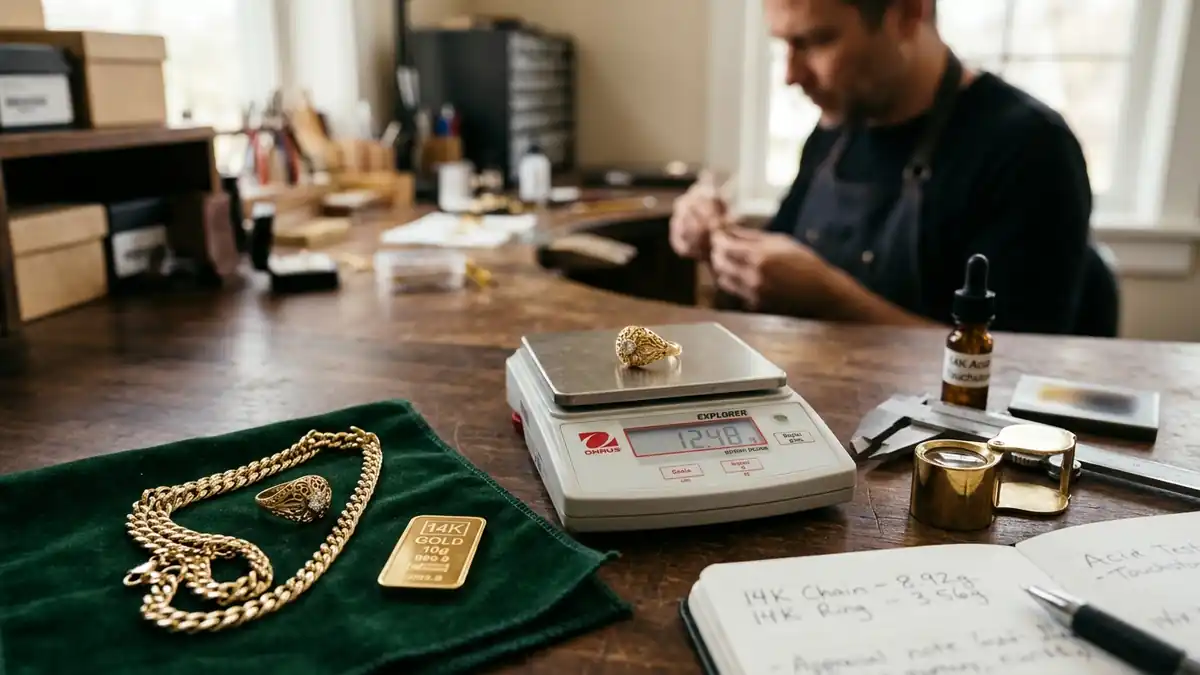
Unlike consumer-facing retail giants such as Titan Company (Tanishq), Kalyan Jewellers, or Senco Gold—which operate expansive branded retail showrooms in shopping malls and high streets—Moksh Ornaments operates primarily as a Business-to-Business (B2B) designer, manufacturer, and wholesale distributor. Its operational focus encompasses:
- Lightweight Gold Jewellery: Specialized manufacturing of 18-karat and 22-karat lightweight chains, bangles, and rings tailored for everyday consumer wear.
- Italian & Indo-Western Fusion Designs: Importing advanced casting and chain-making technology to supply modern, laser-cut Italian designs popular among younger urban demographics.
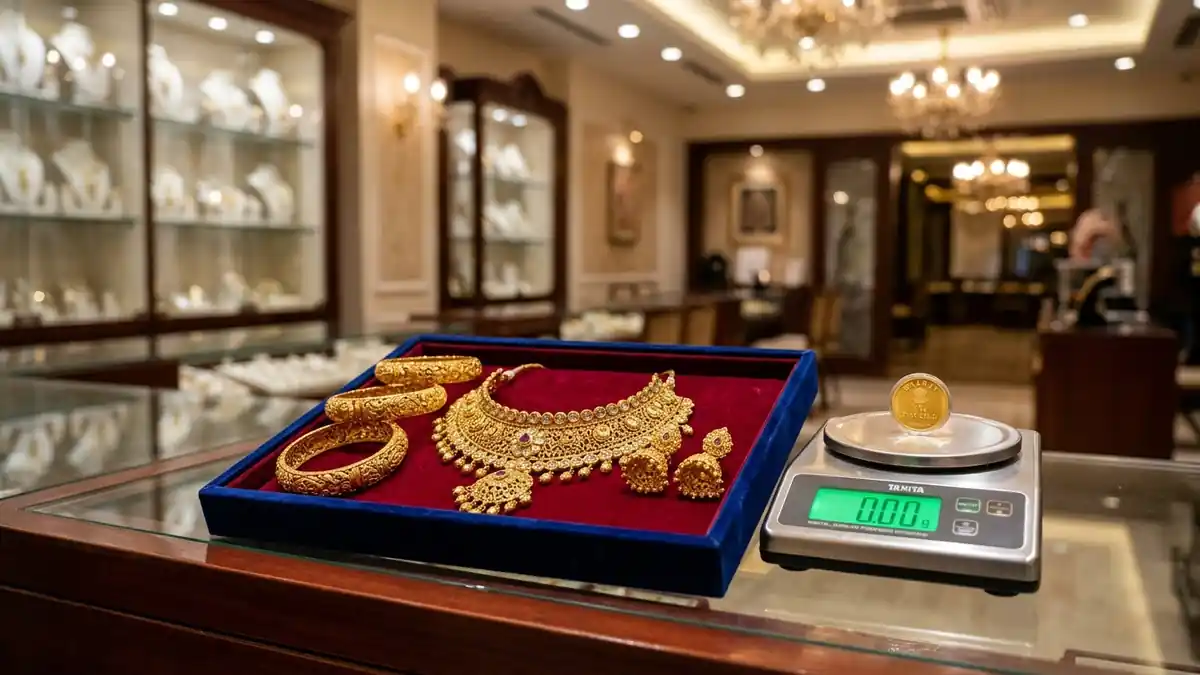
- Bridal & Temple Ornaments: Supplying handcrafted, antique-finish wedding jewelry to independent, regional jewelry retailers across Maharashtra, Gujarat, and South India.
- Export Operations: Fulfilling customized wholesale jewelry orders for overseas retailers in the Middle East (Dubai) and global Indian diaspora markets.
2. The Manufacturing Ecosystem: Zaveri Bazaar & Modern CAD/CAM Technology
Historically, Indian jewelry fabrication was a fragmented, artisanal cottage industry characterized by manual melting, beating, and soldering by traditional karigars (craftsmen) in congested urban lanes. Over the past decade, Moksh Ornaments has modernized its manufacturing processes, operating advanced workshops that integrate computerized technology:
- Computer-Aided Design (CAD) & 3D Printing: Prototype designs are rendered digitally in 3D software and printed in high-precision wax casting molds, reducing metal wastage and ensuring uniform product dimensions.
- Automated Laser Soldering & CNC Chain Machines: Replacing manual welding with laser soldering allows the manufacture of ultra-lightweight hollow gold chains that offer the visual volume of a 30-gram ornament at an actual weight of only 12 to 15 grams, catering to price-sensitive retail consumers.
- Assaying & Laser Hallmarking Infrastructure: Integrated testing facilities ensure that every batch of gold alloy strictly matches certified fineness standards (916 for 22-karat, 750 for 18-karat) prior to statutory BIS submission.
3. B2B Wholesale vs B2C Branded Retail Contrasted
The table below highlights the crucial differences in margins, capital requirements, and business risks between wholesale manufacturers and branded retail chains:
| Dimension | B2B Wholesale Manufacturer (e.g., Moksh Ornaments) | B2C Branded Retailer (e.g., Titan / Kalyan) |
|---|---|---|
| Customer Base | Wholesale jewelers, distributors, independent retail stores | End-consumer families, brides, and retail walk-in shoppers |
| Gross Operating Margin | 2% to 4% (Based on modest manufacturing making charges) | 12% to 18% (Substantial retail brand markup & design premiums) |
| Marketing & Showroom Capex | Minimal; operates from centralized workshops and corporate suites | Massive expenditure on prime retail mall leases, interiors, and TV ads |
| Working Capital Velocity | High inventory turnover; rapid wholesale delivery cycles | Slower inventory turnover; jewelry sits in showroom display cases |
| Brand Power & Pricing Moat | Low consumer brand recognition; competes on design and making costs | High brand pricing power; consumers pay premiums for trusted hallmarking |
3. Audited Financial Performance & Margin Realities
When analyzing Moksh Ornaments’ income statements and balance sheets filed with the NSE, the central financial reality is the extreme divergence between gross revenue and net retained earnings:
| Financial Parameter | Multi-Year Operational Trend | Strategic Investment Insight |
|---|---|---|
| Annual Gross Revenue | ₹400 Crore to ₹550 Crore | Substantial top-line turnover driven by high underlying physical gold bullion volume. |
| Cost of Raw Materials (Gold Bullion) | Over 95% of Total Revenue | The vast majority of top-line cash is expended purchasing raw gold bars from banks and refineries. |
| EBITDA Operating Profit | ₹8 Crore to ₹16 Crore | Operating margins hover between 1.8% and 3.2%, typical of wholesale jewelry fabricators. |
| Finance / Interest Costs | ₹3 Crore to ₹6 Crore | Substantial bank interest charges on working capital loans and Gold Metal Loans (GML). |
| Net Profit After Tax (PAT) | ₹4 Crore to ₹9 Crore | Net profit margins hover around 0.9% to 1.6%, leaving modest retained surplus. |
| Return on Equity (ROE) | 10% to 14% | Healthy return on net owned capital, enabled by high asset turnover despite thin margins. |
| Debt-to-Equity Ratio | Moderate (0.6x to 1.1x) | Short-term working capital borrowings used to maintain required physical gold inventory. |
Forensic Inspection: Working Capital, GML & Cash Flow Conversion
In wholesale jewelry manufacturing, the balance sheet tells a far more critical story than the profit statement. To maintain steady production lines, Moksh must hold substantial quantities of physical gold in raw granules, work-in-progress, and finished ornament inventory. Financing this gold requires sophisticated liquidity mechanisms:
- Gold Metal Loans (GML): Nominated scheduled commercial banks provide gold loans denominated in grams of gold rather than rupees. Under GML, the manufacturer borrows physical gold, fabricates jewelry, sells it to wholesale buyers, and repays the bank in gold or equivalent cash. This shields the company from intra-month gold price fluctuations, though it carries financing interest charges.
- Trade Receivables & Credit Cycles: Independent retailers typically demand 30- to 60-day credit windows. If macroeconomic slowdowns cause retail jewelry sales to stall, trade receivables stretch, trapping cash and increasing working capital interest costs.
- Operating Cash Flow (CFO) Trajectory: Investors must verify that Cash Flow from Operations turns consistently positive over consecutive fiscal years. If operating cash flow remains negative while revenue expands, it indicates that fresh bank borrowings are merely financing unsold inventory or overdue trade receivables.
4. Industry Catalysts: BIS Hallmarking, Duty Cuts & UAE CEPA Exports
Three transformative regulatory developments have altered the operating environment for organized jewelry manufacturers in India:
1. Mandatory BIS Hallmarking Rollout
Under regulations enforced by the Bureau of Indian Standards (BIS) and the Ministry of Consumer Affairs, mandatory hallmarking of gold jewelry has been implemented across more than 350 districts in India. Every piece of jewelry sold must carry a unique 6-digit alphanumeric HUID (Hallmark Unique Identification) code.
This statutory mandate has catalyzed a massive structural shift away from unorganized, unhallmarked local goldsmiths toward organized, compliant wholesale manufacturers like Moksh Ornaments. Independent retail jewelers who previously sourced ornaments from unverified local smiths now depend on organized manufacturers who provide 100% laser-hallmarked, assay-certified jewelry, expanding Moksh’s addressable institutional client base.
2. Union Budget 2024: The Historic Customs Duty Reduction
In the Union Budget announced in July 2024, Finance Minister Nirmala Sitharaman slashed the basic customs duty on raw gold imports from 15% down to 6%—the steepest duty cut in modern Indian economic history. This reform had immediate structural impacts:
- Dismantling Smuggling Arbitrage: By reducing the landed import tariff by 9 percentage points, the incentive for illicit, grey-market bullion smuggling was dramatically diminished, leveling the playing field for formal, tax-compliant B2B players.
- Working Capital Relief: Lower raw gold prices reduced the aggregate capital required to finance physical inventory, allowing manufacturers to maintain larger product varieties without ballooning bank credit lines.
- Consumer Demand Stimulus: Lower domestic retail gold prices spurred wedding and festive jewelry purchases across tier-2 and tier-3 towns, translating into higher wholesale re-orders for B2B manufacturers.
3. The India-UAE CEPA Agreement & Middle East Export Growth
Under the landmark Comprehensive Economic Partnership Agreement (CEPA) signed between India and the United Arab Emirates (UAE), Indian jewelry exporters enjoy zero-duty market access into Dubai—the premier jewelry trading gateway for the Middle East, North Africa, and the global Indian diaspora. As an established Mumbai manufacturer, Moksh Ornaments possesses export logistics channels that allow it to tap high-volume Gulf retail demand during major festive shopping seasons such as Diwali, Eid, and Akshaya Tritiya.
4. Export Promotion Capital Goods (EPCG) & Advanced Casting Automation
To support value addition in gems and jewelry exports, the Ministry of Commerce administers the Export Promotion Capital Goods (EPCG) Scheme, allowing manufacturers to import high-end Italian and German jewelry manufacturing machinery—such as 3D laser-sintering machines, automated continuous casting kilns, and multi-axis CNC milling tools—at zero customs duty, subject to fulfilling an export obligation. Moksh Ornaments has utilized technological modernization to reduce manufacturing cycle times and minimize metal melt loss, which in gold jewelry fabrication directly converts into operational cost savings.
5. Moksh Ornaments Share Price Targets: 2025, 2026, 2028 & 2030
Because Moksh Ornaments is a small-cap counter, major domestic institutional brokerages do not publish formal target prices based on institutional consensus. The projections below represent scenario-based mathematical simulations grounded in audited earnings trajectories, working capital management, and jewelry industry growth:
| Target Horizon | Bearish / Stagnation Scenario | Base / Moderate Scenario | Bullish / Expansion Scenario | Key Operational Trigger |
|---|---|---|---|---|
| Year 2025 (Review) | ₹7.50 – ₹9.50 | ₹11.00 – ₹14.00 | ₹16.00 – ₹20.00 | Absorption of post-budget inventory revaluation, working capital stabilization, and wedding season orders. |
| Year 2026 (Current) | ₹8.00 – ₹10.50 | ₹13.00 – ₹16.50 | ₹19.00 – ₹24.00 | Expansion in export shipments to UAE/Gulf diaspora and onboarding of regional retail jewelry chains. |
| Year 2027 | ₹8.50 – ₹11.50 | ₹15.00 – ₹19.00 | ₹23.00 – ₹29.00 | Scaling of higher-margin studded/Cubic Zirconia jewelry and adoption of automated CNC casting machinery. |
| Year 2028 | ₹9.00 – ₹12.50 | ₹17.00 – ₹22.00 | ₹27.00 – ₹35.00 | Diversification into semi-branded wholesale formats and expansion of return on equity above 15%. |
| Year 2030 (Long-Term) | ₹10.00 – ₹14.00 | ₹20.00 – ₹27.00 | ₹34.00 – ₹45.00 | Sustained compounding of net profit to ₹20+ Crore, potential transition toward private-label retail distribution. |
Operational Milestones Required to Reach ₹35+ by 2030
To understand what operational performance would justify the bullish scenario of ₹35 to ₹45 per share by 2030, investors must examine the mathematical valuation requirements:
- Net Profit Compounding: Current annual net profit hovers between ₹5 Crore and ₹8 Crore. To support a ₹200+ Crore market capitalization at a fair P/E multiple of 12x to 15x, audited PAT must expand sustainably to ₹16 Crore to ₹20 Crore.
- Margin Expansion into Studded Jewelry: Plain gold wholesale manufacturing caps EBITDA margins near 3%. To expand net margins toward 3% to 4%, Moksh must increase the proportion of diamond-studded, gemstone, and certified designer jewelry in its product mix.
- Working Capital Discipline: Reducing working capital borrowing costs through timely collection of trade receivables and optimal utilization of Gold Metal Loans to keep interest coverage comfortably above 3.5x.
6. Comprehensive Seven-Point Investor Risk Audit for Small-Cap Jewelry Stocks
Before purchasing shares of small-cap jewelry enterprises like Moksh Ornaments, retail investors must complete this seven-point due diligence checklist:
- Raw Gold Price Volatility & Inventory Risk: If international gold prices experience sudden sharp declines, the value of physical bullion inventory held in workshops drops immediately, requiring accounting inventory write-downs that erode quarterly profit margins.
- Thin Operating Margins (Under 3%): Because wholesale margins are razor-thin, even modest increases in electricity tariffs, labor artisan wages, or bank borrowing rates can wipe out net profitability.
- Working Capital Debt Load: Jewelry manufacturing is extraordinarily capital-intensive. Review the company’s debt-to-equity ratio and ensure that interest coverage ratios remain comfortably above 2.5x to 3.0x.
- Client Credit Default Risk: B2B wholesalers often supply inventory to independent retail jewelers on credit terms (e.g., 30 to 90 days). If retail clients default or delay payments during economic slowdowns, trade receivables turn into non-performing assets.
- Micro-Cap Trading Liquidity: Small-cap stocks trade with lower daily volumes than Nifty heavyweights. Buying or selling large quantities can trigger high slippage and circuit limit freezes. Keep position sizing strictly disciplined.
- Bullion Hedging Discipline on MCX: Verify through annual report notes whether the company actively hedges unbacked gold price exposure using commodity futures contracts on the Multi Commodity Exchange (MCX) or operates with open bullion risk.
- Related Party Transactions Audit: In the jewelry wholesale trade, promoters often operate multiple proprietary trading partnerships or allied family firms. Scrutinize Note 28 (Related Party Disclosures) in audited annual reports to ensure transactions with promoter-held entities occur strictly at arm’s length.
7. Frequently Asked Questions (FAQ)
What is Moksh Ornaments Limited’s NSE Ticker Symbol and ISIN?
Moksh Ornaments is listed on the National Stock Exchange of India under the ticker symbol MOKSH. Its demat ISIN is INE514Y01020.
Is Moksh Ornaments listed on the Bombay Stock Exchange (BSE)?
Moksh Ornaments’ primary trading listing is on the National Stock Exchange (NSE). Investors should verify active cross-listing status on the BSE before placing orders.
Why does Moksh Ornaments have high sales but relatively low profit?
Moksh operates as a B2B wholesale jewelry manufacturer. Over 95% of its gross sales represent the pass-through cost of raw gold bullion. Its gross profit is earned strictly from manufacturing “making charges,” which typically range between 1.8% and 3.2% of total turnover.
Can Moksh Ornaments reach ₹50 or ₹100 per share by 2030?
For Moksh Ornaments to reach ₹50 per share, its market capitalization would need to expand to nearly ₹300 Crore. This would require the company to compound annual net profit from current levels of ₹5–₹8 Crore up to ₹25–₹30 Crore, which is possible only under aggressive export expansion and higher-margin branded retail diversification.
How does the 2024 gold duty cut affect Moksh Ornaments?
The reduction of basic customs duty on gold from 15% to 6% lowers the working capital cost of holding bullion inventory, reduces competition from illegal grey-market smugglers, and boosts domestic jewelry demand across formal retail channels.
What is the nominal face value of Moksh Ornaments shares?
The nominal face value of Moksh Ornaments equity shares is ₹2.00 per share, following a corporate stock split from its original face value of ₹10.00 per share.
Does Moksh Ornaments operate branded retail jewelry showrooms?
No. Moksh Ornaments is primarily a B2B manufacturer and wholesaler supplying independent retail jewelers, wholesale distributors, and export markets. It does not operate large consumer showroom networks like Tanishq or Kalyan Jewellers.
How are capital gains on Moksh Ornaments shares taxed in India?
Under the Finance Act 2024, listed equity shares held for more than 12 months qualify as Long-Term Capital Gains (LTCG) and are taxed at 12.5% on gains exceeding ₹1.25 Lakh. Shares held for 12 months or less are subject to Short-Term Capital Gains (STCG) tax at 20%.
What is a Gold Metal Loan (GML) and how does it protect Moksh?
A Gold Metal Loan is a specialized credit line from scheduled commercial banks where gold is borrowed in physical weight (grams) rather than rupees. The manufacturer pays interest in cash and repays the physical gold weight upon selling finished ornaments, mitigating the risk of raw gold price volatility during the manufacturing period.
What role does HUID play in Moksh Ornaments’ products?
Every piece of gold jewelry produced by Moksh carries a mandatory 6-digit alphanumeric Hallmark Unique Identification (HUID) laser-engraved by a BIS-certified Assaying and Hallmarking Centre (AHC), assuring wholesale buyers of exact purity and legal traceability.
8. Strategic Conclusion & Portfolio Guidance
Moksh Ornaments Limited represents a focused B2B jewelry manufacturer benefiting from the structural formalization of the Indian gems and jewelry sector, mandatory BIS hallmarking, and pro-industry customs duty rationalization. Its low nominal share price and exposure to Indian gold consumption make it an intriguing small-cap study.
However, investors must temper speculative expectations with fundamental discipline. In wholesale jewelry fabrication, profit growth depends entirely on expanding high-value designer segments, managing gold price hedging, and controlling working capital interest costs. Prudent investors should view micro-cap jewelry stocks as high-risk, satellite portfolio allocations, maintaining strict stop-loss boundaries and never allocating more than 1% to 2% of total equity capital.
9. Important Statutory Disclaimers & Regulatory Notices
Educational and Informational Notice: This article is published strictly for financial literacy, corporate analysis, and investor education purposes. SharePriceHub is an independent financial education portal and is not a SEBI-registered investment advisor, portfolio manager, or research analyst.
Small-Cap Securities Warning: Investments in small-cap and micro-cap equities carry substantial risks, including high volatility, liquidity constraints, and business concentration risks. Share price targets discussed in this article are hypothetical scenario-based projections and must not be construed as investment recommendations. Readers must conduct independent due diligence or consult a qualified SEBI-registered financial planner before committing capital.